Web Design
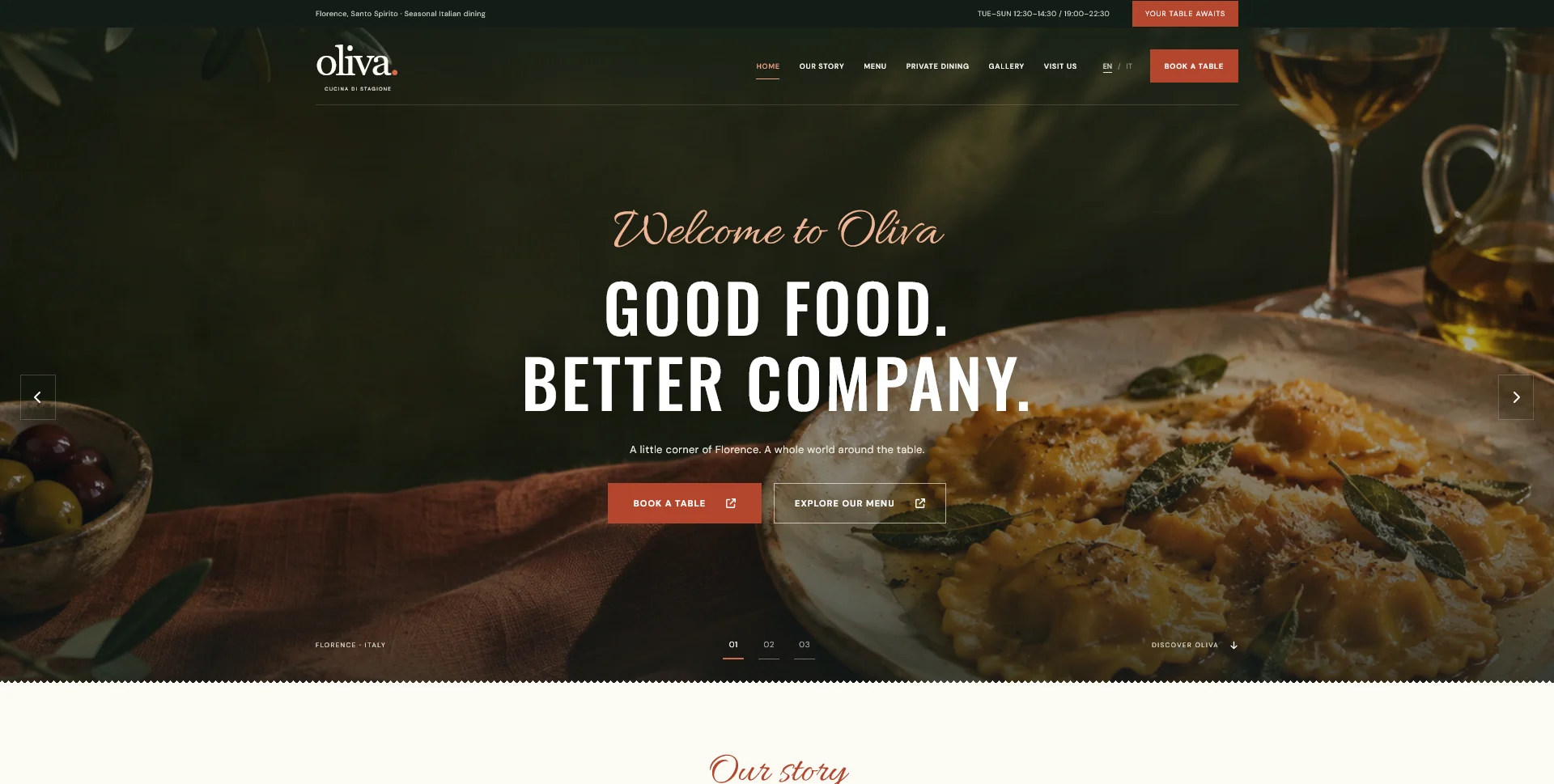
Oliva
A personal restaurant website concept combining an expressive Italian dining atmosphere with a photographic menu, clear visit information and a demonstration reservation journey.
 Let’s talk
Reduce avoidable confusion in restaurant enquiries by clarifying menus, party sizes, contact routes and service limits before guests request a reservation.
When a restaurant receives unsuitable reservation enquiries, first check what the website led guests to expect. Repeated questions about closed services, unavailable arrangements or the wrong location can reveal missing information. The useful response is to clarify the offer and the route before asking everyone to complete a longer form.
Some enquiries are legitimate questions that the restaurant should welcome. Others fall outside what the team can provide. Distinguishing the two helps improve the website without making it unfriendly or treating every unusual request as a problem.
Ask the team which information lets them give a meaningful answer. For a standard reservation, that might mean a supported date, party size, location and reply route. A private event may require a different assessment.
Separate administrative fit from commercial value. A request that needs clarification is not automatically a poor lead, and a small booking can still be entirely appropriate. The purpose is to reduce avoidable confusion, not to judge guests by assumptions about their spending.
The existing guide to restaurant reservation goals explains why useful requests, confirmed tables and business results should remain distinct measures.
Ask staff to summarise recurring issues in general terms. You do not need to paste names, contact details or complete messages into a design brief to explain that guests often ask about lunch on a day when only dinner is served.
Group the observations and identify what the website currently says. Look for a pattern before making a broad change in response to one unusual enquiry.
| Recurring enquiry | Information to investigate | Possible website improvement |
|---|---|---|
| Requests outside service times | Opening and kitchen-service explanations | Distinguish access hours from meal periods |
| Groups beyond the usual table process | Party-size guidance and event information | Explain the appropriate group-enquiry route |
| Requests for a different venue | Location labels and booking destination | Keep location context visible through the journey |
| Questions based on an old menu | Dates, links and content ownership | Publish the current menu and retire misleading versions |
| Guests arriving before confirmation | Button and acknowledgement wording | Distinguish a request from an accepted reservation |
Treat each row as a hypothesis to check. The problem may sit in an external listing or provider as well as on the website.
Explain the information that changes whether a guest should use a route before they submit. Examples include which service the menu applies to, whether the page concerns a particular location and when a group request should go to the events team.
Keep the wording welcoming and specific. “For larger groups, tell us about your occasion through the private-dining enquiry” gives a useful direction. An unexplained maximum in a form leaves the guest to guess whether the restaurant can help at all.
The restaurant CTA guide connects these explanations with the next action. The contact-channel guide helps give exceptions a supported destination.
Words such as “for every occasion” can imply more flexibility than the restaurant offers. Describe the actual arrangements: ordinary dining, private use of a room or a group menu, with the details the business can confirm.
Use approved menu and allergen information, and identify how guests should discuss requirements that need an individual response. Avoid turning a general label into a promise about every dish or preparation.
For timing, distinguish the restaurant’s hours from the period in which a particular menu is served. For availability, explain whether the website displays confirmed bookable times or simply collects a preference for staff to review.
The Oliva restaurant website concept gives private dining its own destination alongside the menu and table-booking route. That separation provides space to explain a different kind of visit before asking for details.
Oliva is a fictional personal concept; its sample menu and arrangements are demonstration content. For a real restaurant, the structure should be populated with the actual offer, capacity and team process.
A separate page is useful when it answers different questions. It is less useful when it repeats the homepage and adds another generic contact button. Link the explanation to a form or channel designed for that purpose.
Once the page explains the route, review which fields support the remaining decision. A location choice can prevent misrouting for a multi-location business. A clear date and party-size field can avoid a follow-up that asks for information omitted from an open message box.
Add a question only if someone will use the answer. Making an unrelated detail compulsory can discourage suitable enquiries without improving the team’s ability to respond.
The reservation form-fields guide provides a field-purpose checklist. Use it with the request-confirmation guide so the guest understands both what to send and what submission means.
People may arrive through a menu link, a location page, a search result or a saved URL. The homepage cannot carry all the information needed to correct expectations elsewhere.
Review the pages associated with the recurring question. If the dinner menu is shared directly, does it identify the relevant service and route to booking? If several venues exist, does each destination use the correct details? The location-page guide helps prevent these mismatches.
For international guests, inspect the translated route too. The multilingual website guide explains why translating a welcome message without the contact process can leave the important uncertainty unresolved.
Choose one observable issue and record the change made. During an agreed review period, ask whether the same question continues and whether staff can respond more easily.
Keep the counts in context. A fall in unsuitable requests may reflect less traffic, a change in season or a different booking source. Avoid treating a single improved percentage as proof of a design effect without considering what else changed.
Some findings call for better content; others call for a staffing or provider decision. The refresh-or-rebuild guide helps match the intervention to the cause instead of assuming every enquiry issue requires a new website.
Usually the better starting point is to explain each route and its purpose. Hiding a legitimate option can also make it harder for suitable guests to ask a necessary question.
Only when the added fields support a real decision. Clarify the offer first, then collect the minimum useful information for the route.
Send the current URL, a few anonymised patterns and the actual rules or arrangements the page needs to explain. Include who handles the requests and where the uncertainty occurs.
SavianoDesign’s Website Design service can help review the relationship between service information, navigation and enquiry actions. Share the repeated questions your team receives so we can define a focused content and design scope.
Web Design
A personal restaurant website concept combining an expressive Italian dining atmosphere with a photographic menu, clear visit information and a demonstration reservation journey.
Web Design
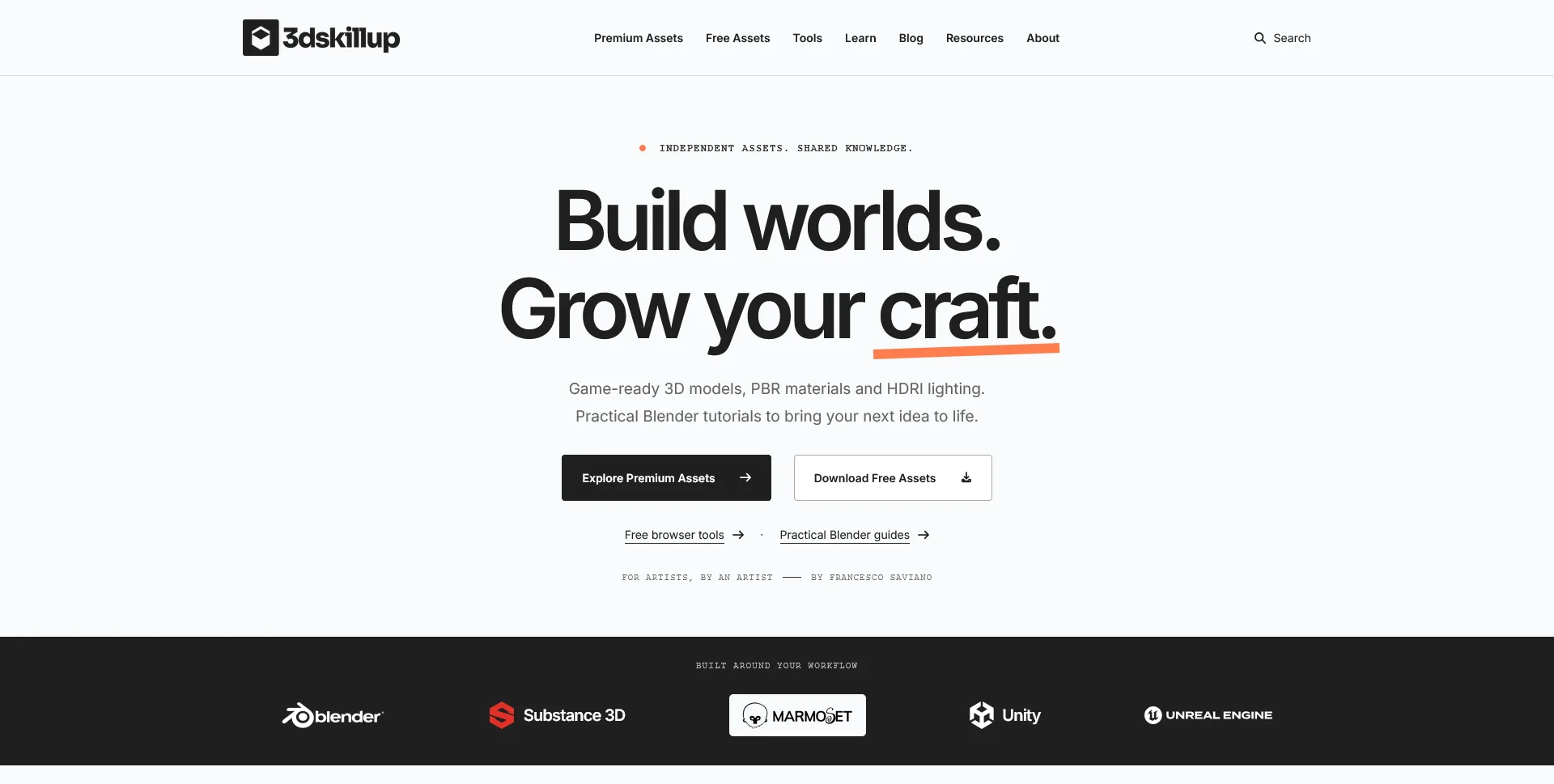
A separate creative platform bringing together game-ready 3D assets, practical tutorials and resources for artists.
Web Design
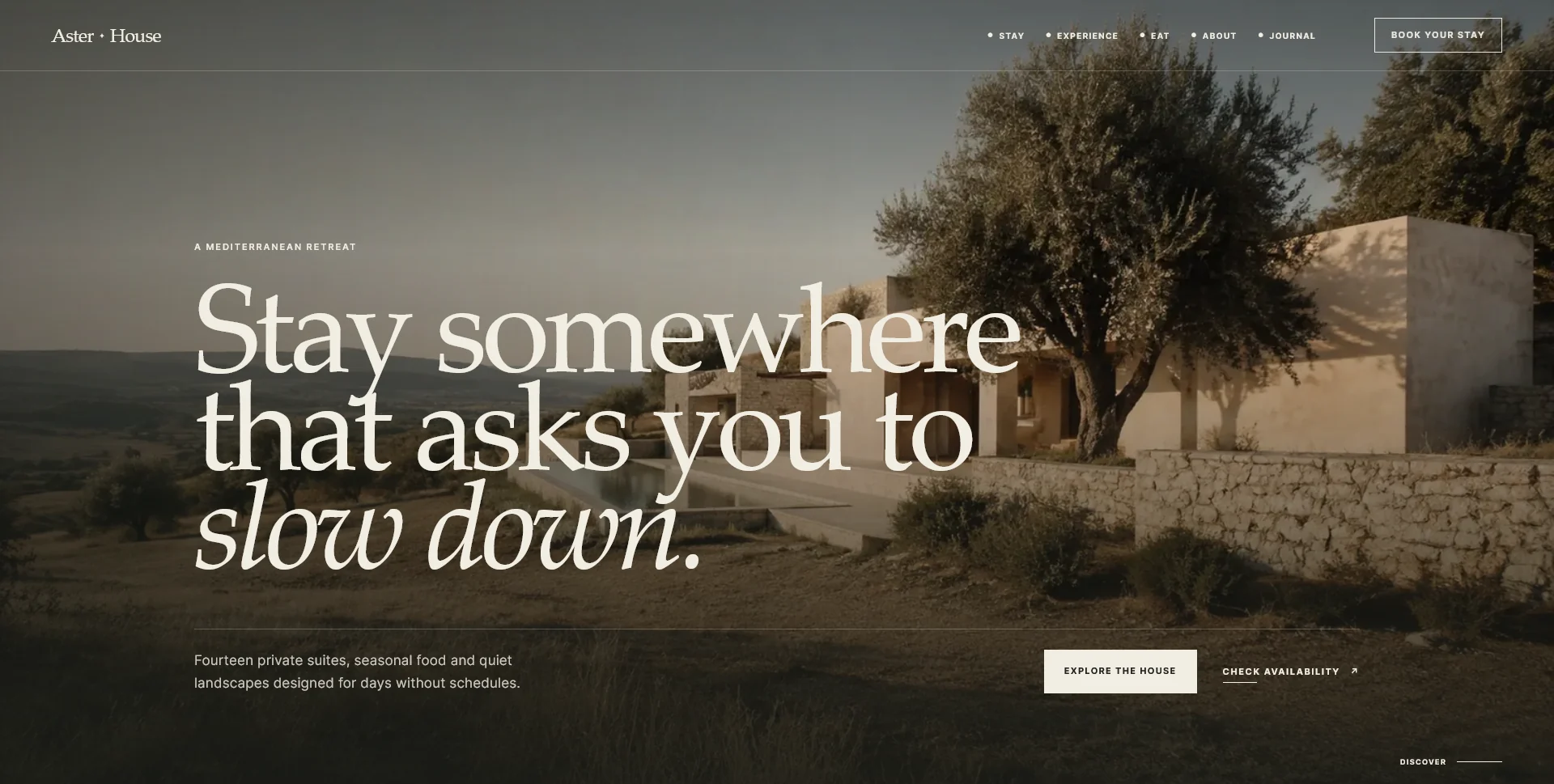
An editorial hospitality concept, combining a Mediterranean visual direction with responsive front-end development.
Web Design · 6 min read
Choose the fields a restaurant reservation form really needs. Separate required details, optional context and later questions, with clear request expectations.
Web Design · 6 min read
Plan restaurant location pages with useful local details. Connect each venue to its menu, dining space and contact route without repeating generic area copy.
Web Design · 7 min read
Set useful restaurant website goals. Distinguish visits, booking clicks, enquiries and confirmed tables, then define reliable measures and review criteria.
Have a website in mind?
A short outline is enough to start a conversation.
Discuss your project View my 99designs profile5.0 / 5 from 25 reviews on 99designs. Read client feedback.