Web Design
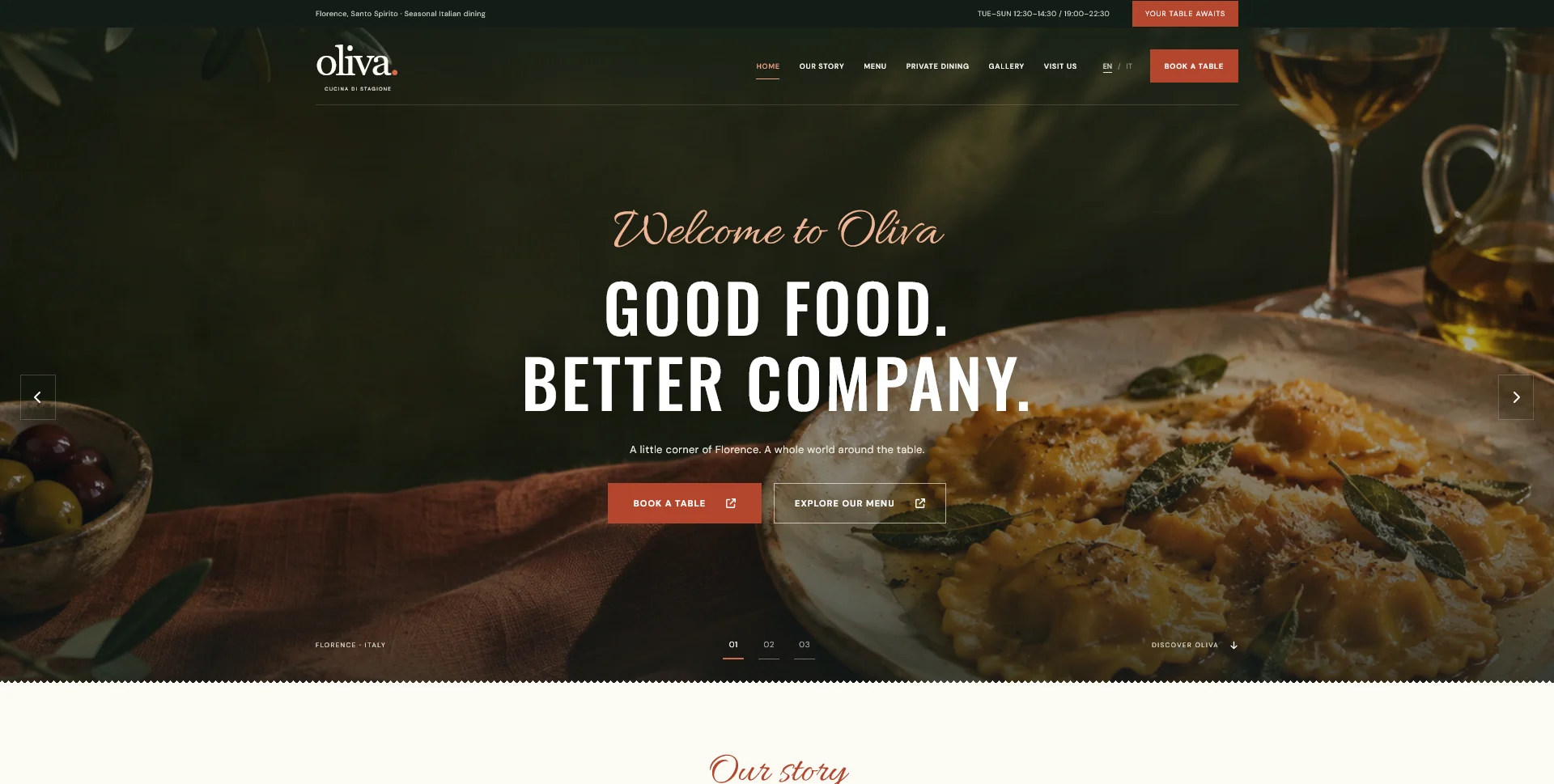
Oliva
A personal restaurant website concept combining an expressive Italian dining atmosphere with a photographic menu, clear visit information and a demonstration reservation journey.
 Let’s talk
Decide when a restaurant website should prioritise email, phone or online booking. Match each route to guest needs, staff availability and actual follow-up.
Give priority to the contact channel that suits the guest’s task and the restaurant’s ability to handle it. A booking service may be the clearest route for a standard reservation, while a private event needs a conversation and a change to tonight’s table may need a different channel again.
Displaying an email address, telephone number, form and booking button with equal emphasis leaves the guest to choose without enough information. A useful contact page explains what each route is for, when it is appropriate and what happens after someone uses it.
List who checks each inbox, answers calls and maintains any booking provider. Confirm the actual service hours and the arrangements outside them. An attractive chat or messaging icon is not useful if nobody is responsible for the conversation it starts.
Then list the main reasons people make contact: ordinary reservations, changes to existing bookings, group dining, practical visit questions and other enquiries. Match each reason to a supported route.
This exercise often reveals that the website needs fewer unexplained options rather than more communication tools. The reservation CTA guide turns the resulting decisions into clear labels and placements.
| Channel | Where it can help | Detail the website should explain |
|---|---|---|
| Booking provider | Standard reservations with the provider’s supported process | Whether guests see live availability and receive confirmation |
| Request form | Structured enquiries the team will review | Required details, recipient and confirmation process |
| Telephone | Questions or changes the restaurant actually handles by phone | Appropriate calling information and the purpose of the route |
| Enquiries that benefit from a written exchange | What to include and whether the address handles reservations | |
| Private-event route | Group requirements that need assessment | Information needed to begin and who follows up |
There is no universal winner. Choose according to staffing, the existing tools and the type of visit. A phone-first restaurant and one using a reservation platform can both have a clear website.
Give the main booking or request action a consistent place in navigation and repeat it at relevant points, such as after the menu. Explain the destination before handing the guest to another service.
If the route is a request, say so. If a provider confirms the booking, keep the terminology consistent with that provider. Avoid changing between “enquiry”, “reservation” and “confirmation” as if they described the same event.
The Oliva restaurant concept separates table booking from private dining in its navigation and page structure. It is a personal demonstration with local form summaries; the transferable design decision is the separation of guest intentions.
A guest with an existing reservation may not need the same route as someone booking for the first time. Tell them where to manage it, using the restaurant’s actual provider or staff process.
For example, if a booking email contains the management link, the website can explain that. If the team handles changes by telephone during agreed hours, state that arrangement. Do not send everyone through a new-booking form and expect staff to infer the purpose.
Any cancellation conditions should be accurate, approved and consistent across the website and provider. The design task is to make the agreed information findable; the website designer should not invent the restaurant’s policy.
Some enquiries arrive because the menu, hours or visit information is unclear. A guest asking whether the kitchen is open at a particular time may need a better explanation of service hours more than another messaging option.
Keep menu descriptions and the restaurant’s approved allergen information accessible. Provide a suitable route for questions that require the team’s review, without implying that a general page can resolve every individual requirement.
The guide to improving reservation enquiry quality shows how to identify these gaps. For businesses with more than one venue, the location-page guide helps connect the correct menu, hours and contact destination.
Before publishing a response window, confirm how messages are monitored during service, closures and busy periods. A precise sentence is useful only if it describes a real commitment.
Where response time varies, explain the process and the appropriate route for a time-sensitive question. Do not turn a routine enquiry form into an implied immediate-response channel because that sounds reassuring.
The reservation acknowledgement guide connects the contact-page promise with what appears after submission. Page text, automated messages and staff replies should describe the same sequence.
A primary route should be prominent without making legitimate alternatives difficult to find. Someone who cannot use a provider or needs to ask a question should be able to identify another supported option.
Use descriptive links rather than a row of unexplained icons. A phone link should identify the calling action; an email link should make clear that it opens the guest’s mail application. Avoid presenting either click as proof that the restaurant has received the enquiry.
If the restaurant serves guests in several languages, translate the contact explanation as well as the menu. The multilingual restaurant website guide helps prioritise that complete journey.
Test what the guest sees, then verify what the restaurant receives. A form can look complete while routing messages to an account nobody checks. A provider link can load successfully while opening the wrong location.
Agree who reviews these routes after launch and when changes require a website update. A new phone number, changed provider or revised reception arrangement should trigger a coordinated update rather than a correction to one isolated page.
For a structured route, use the reservation form-fields guide to define the information that supports the next decision without overloading the guest.
No. Choose according to the task and the team’s operating process. A reliable booking provider may be more appropriate for ordinary reservations, with telephone supporting other needs.
It can be part of a workable arrangement if its purpose and handling are clear. Structured requests may benefit from a form that gathers the necessary information consistently.
Only when there is a reason to use it and someone can operate it. Review unanswered questions and existing channels before introducing another place guests expect a reply.
Share the channels your restaurant uses and who manages them. SavianoDesign’s Website Design service can help organise the content and interface around those routes, with the relevant frontend or CMS work defined in the proposal.
Web Design
A personal restaurant website concept combining an expressive Italian dining atmosphere with a photographic menu, clear visit information and a demonstration reservation journey.
Web Design
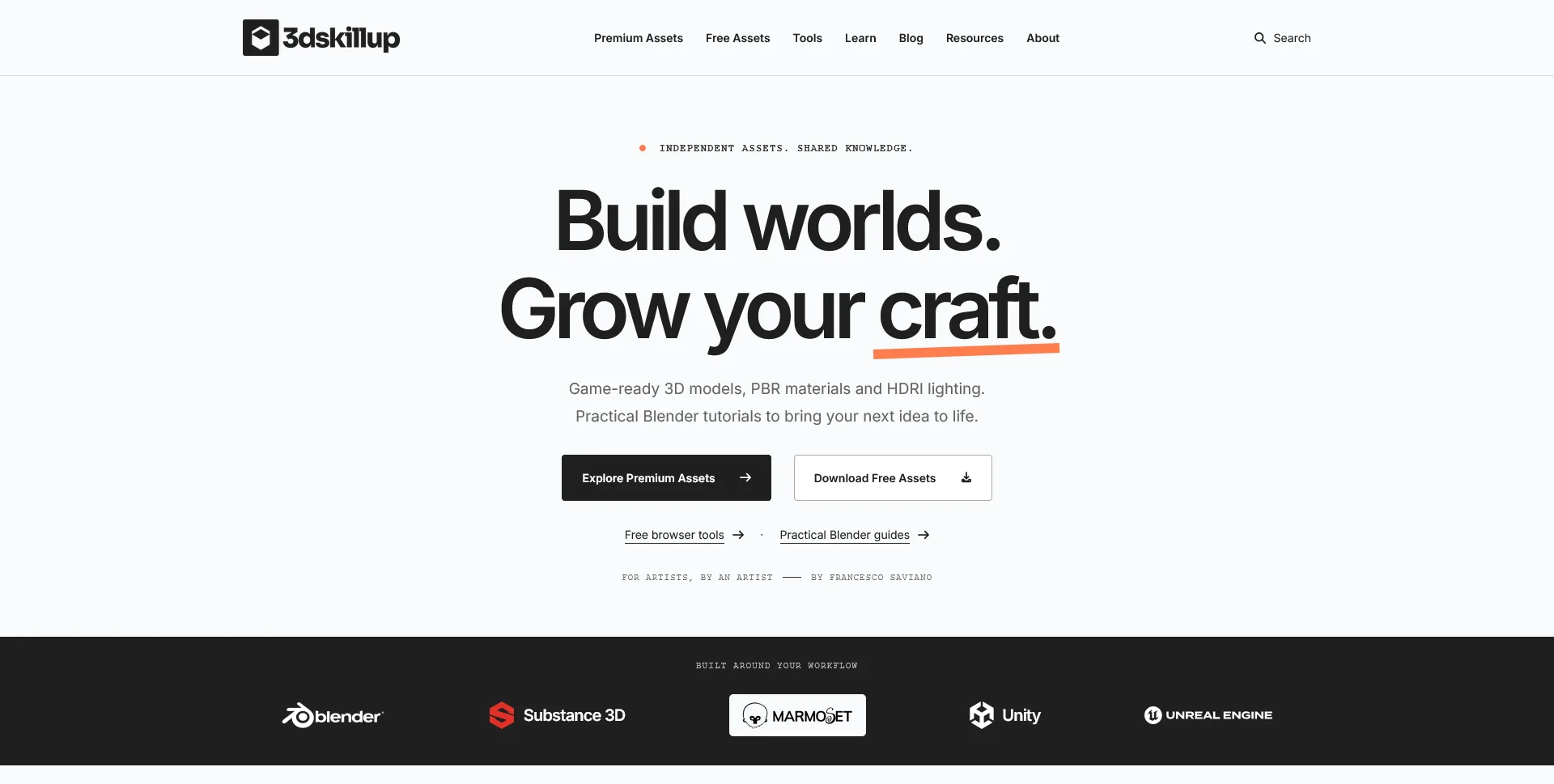
A separate creative platform bringing together game-ready 3D assets, practical tutorials and resources for artists.
Web Design
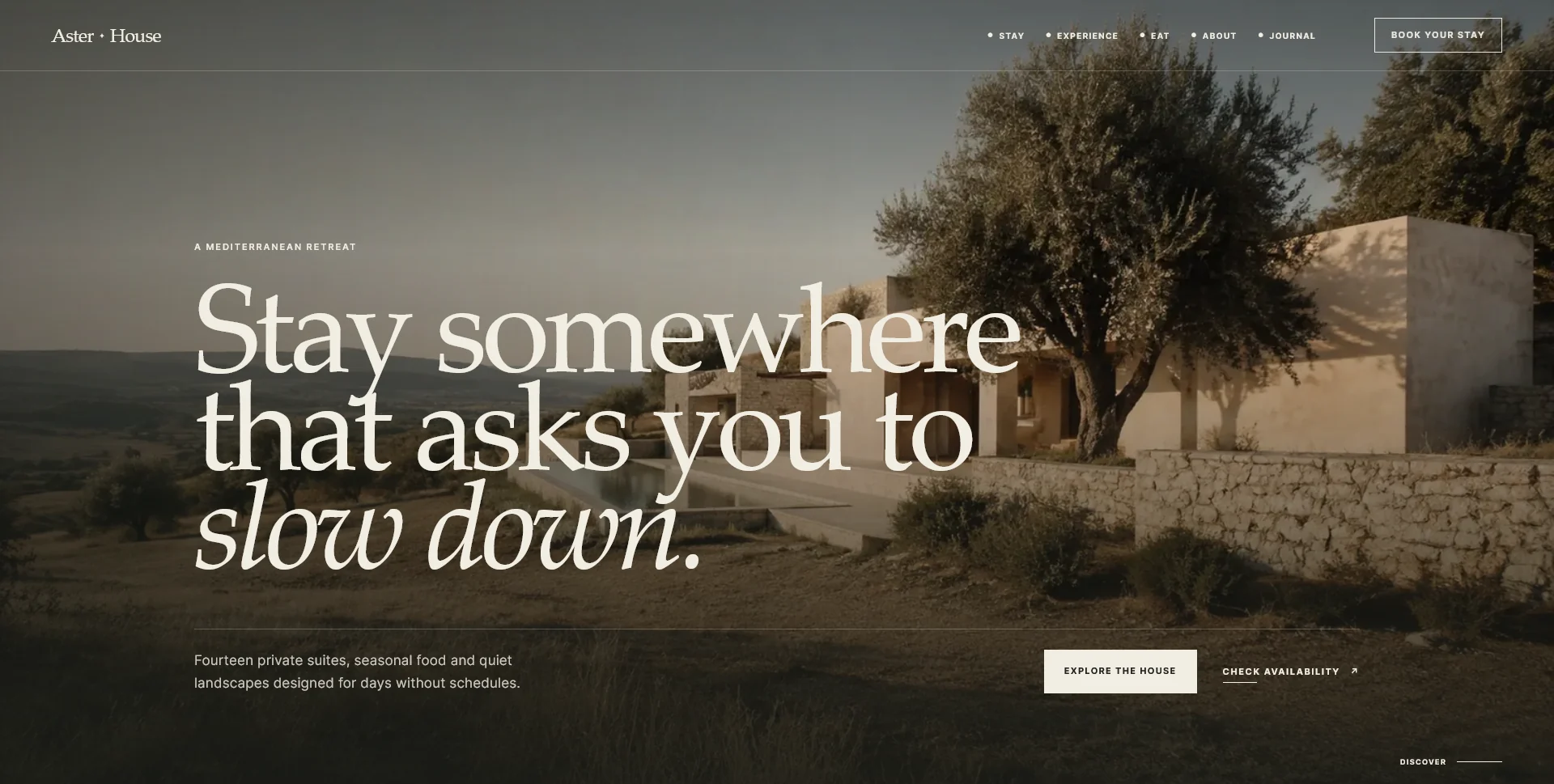
An editorial hospitality concept, combining a Mediterranean visual direction with responsive front-end development.
Web Design · 6 min read
Plan restaurant website calls to action around guest decisions. Choose clear labels, useful positions and reservation routes that match what happens next.
Web Design · 6 min read
Explain what happens after a restaurant reservation request. Plan accurate success messages, confirmation details, realistic follow-up and useful next steps.
Web Design · 6 min read
Prioritise translation for a multilingual restaurant website. Plan menus, visit details, contact instructions and confirmation states as one guest journey.
Have a website in mind?
A short outline is enough to start a conversation.
Discuss your project View my 99designs profile5.0 / 5 from 25 reviews on 99designs. Read client feedback.