Web Design
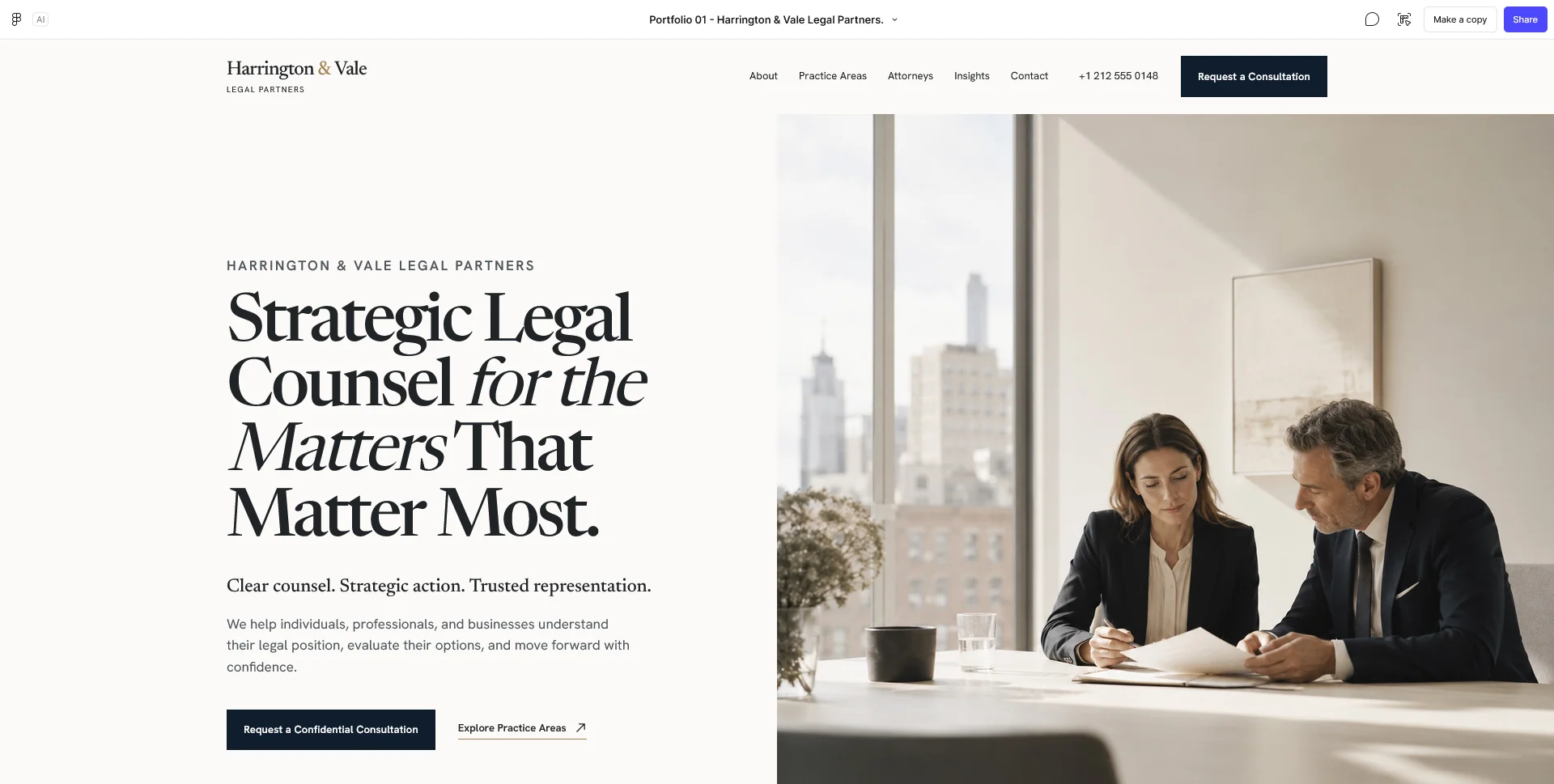
Law Firm — Website Design
A fictional law firm website concept for Harrington & Vale, exploring editorial design, clear navigation and a visual identity built around trust.
 Let’s talk
Define dental website goals with clear measures for visits, contact actions, received enquiries and confirmed appointments. Review results without overclaiming.
A measurable dental website goal defines an observable action and the process that follows it. “Help suitable visitors submit an appointment request that reception can handle” is more useful for planning than “get more patients”, because the first statement identifies something the team can design, test and review.
Website visits, contact clicks, received enquiries and confirmed appointments are different measures. Keeping them separate helps a practice understand where the journey works and where a problem may sit, without assuming that every change in business results was caused by the website.
Some goals can be checked before publication: current team information is visible, service descriptions are approved, navigation works on a phone and a test request reaches the agreed recipient.
Other outcomes require real activity over time: how many visitors contact the practice, whether their enquiries are relevant and how many appointments are subsequently confirmed. These also depend on demand, availability and the way the practice responds.
Use the dental website project-timeline guide to put launch checks into the delivery plan. Do not treat a lack of immediate enquiries as proof that a technically complete website has failed its acceptance criteria.
Decide whether the main website task is an information enquiry, an appointment request or a booking completed through an external service. The definition should match the actual practice process.
A click on a telephone link is an attempt to start a call, not evidence that a conversation occurred. A click through to a booking provider is a handoff, not proof of a confirmed appointment. A form’s success message should correspond to a real accepted submission rather than merely the click on its button.
The guide to contact-page response expectations explains why acknowledging receipt and confirming an outcome require different wording.
| Measure | What it records | What it does not establish |
|---|---|---|
| Measured visit or session | Activity recorded under the chosen analytics definition | A unique person or a future patient |
| Contact action | A click on an agreed call, email or request route | A completed conversation or received message |
| Received request | A submission accepted by the agreed process | Clinical suitability or a confirmed appointment |
| Relevant enquiry | A request the practice classifies as within its administrative scope | Treatment need or eventual revenue |
| Confirmed appointment | An appointment recorded as confirmed in the practice’s process | Attendance, treatment completion or profit |
Define each term with the people who collect and review the information. Avoid building a dashboard whose labels imply stronger evidence than the underlying data provides.
For administrative review, the practice might distinguish requests about available services from supplier messages, duplicates or enquiries intended for another location. Keep the classification focused on the business process.
Do not infer a person’s clinical suitability from the page they viewed or the button they clicked. That belongs to the appropriate professional process, not a marketing metric.
Use aggregate reporting for the website review. Do not send names, contact details, health information or free-text form contents to analytics. Agree measurement, consent and data-handling requirements with the practice’s responsible team and provider before enabling tracking; this guide does not prescribe a clinical-data system.
If the goal is to understand the share of measured sessions that include a successful request, count sessions with at least one such event and divide by eligible measured sessions over the same period. Do not divide raw submission events by unique visitors and label the result a patient conversion rate.
Consider a fictional example: 400 eligible measured sessions include 20 sessions with a successfully received request. Under that definition, the session request rate is 5%. It says nothing by itself about the number of distinct people, clinical need or confirmed appointments.
The practice’s administrative review might separately record relevant enquiries and appointments. Use a defined period and consistent records before comparing stages. Do not combine unrelated totals merely because they all appear in the same month.
A rise from two requests to four is a large percentage change but still only two additional requests. Check the period, traffic sources, practice availability and any changes in measurement before attributing it to a new page design.
Look for patterns across several review periods and combine the counts with practical observations from reception. Repeated questions about opening information may reveal a content gap even when traffic is too limited for a reliable conversion comparison.
The consultation landing-page measurement guide explains the importance of clear denominators and proportionate conclusions. Use the numbers to identify the next question, not to manufacture certainty.
If visitors reach a service page but cannot find the next step, inspect the action and its explanation. If requests arrive but many concern unavailable services, review the scope of the content. If received requests do not progress, examine response handling and availability before redesigning the whole website.
The dental website refresh-or-rebuild guide helps classify those issues. A wording change, a clearer route or an operational adjustment may be more appropriate than a complete visual replacement.
For the first release, the essential-pages guide provides the information structure that makes the enquiry journey understandable in the first place.
The Harrington & Vale professional-service concept presents a route from service information and professional profiles toward consultation. It can support a discussion about what visitors need to understand before contacting a practice.
It is a personal concept, not evidence of measured dental enquiry results. Ask how the proposed design will make your own task clearer and how completion will be tested. A portfolio reference is more useful when connected with a review question than with an assumed conversion promise.
This also helps keep the brief focused on what the website can reasonably influence: clarity, findability and a dependable next step.
An illustrative goal might read: “The first release will help new visitors identify the practice, understand the relevant service and send an appointment request. Before launch, we will test receipt and acknowledgement. During the agreed review period, we will examine aggregate request activity and reception’s administrative feedback, keeping confirmed appointments separate.”
Add the responsible reviewer, the review period and the definitions used. Agree a baseline where reliable data exists, and identify measurement gaps rather than inventing one.
The phased-launch guide helps turn later findings into a prioritised improvement list. The content checklist helps prepare the material needed to resolve those findings.
They can provide context, but they do not establish useful contact. Choose measures that reflect the visitor action and the practice’s actual response process.
Yes. Test the journey, review aggregate request records through an appropriate process and collect structured feedback from reception. State the limits of what those observations show.
No. The website can improve the clarity and reliability of the journey, but demand, availability, response handling and other conditions affect appointment outcomes.
Share the audience, intended contact action and how the practice handles requests today. SavianoDesign’s Website Design service can help turn those requirements into a clear structure, interface and reviewable project scope.
Web Design
A fictional law firm website concept for Harrington & Vale, exploring editorial design, clear navigation and a visual identity built around trust.
Web Design
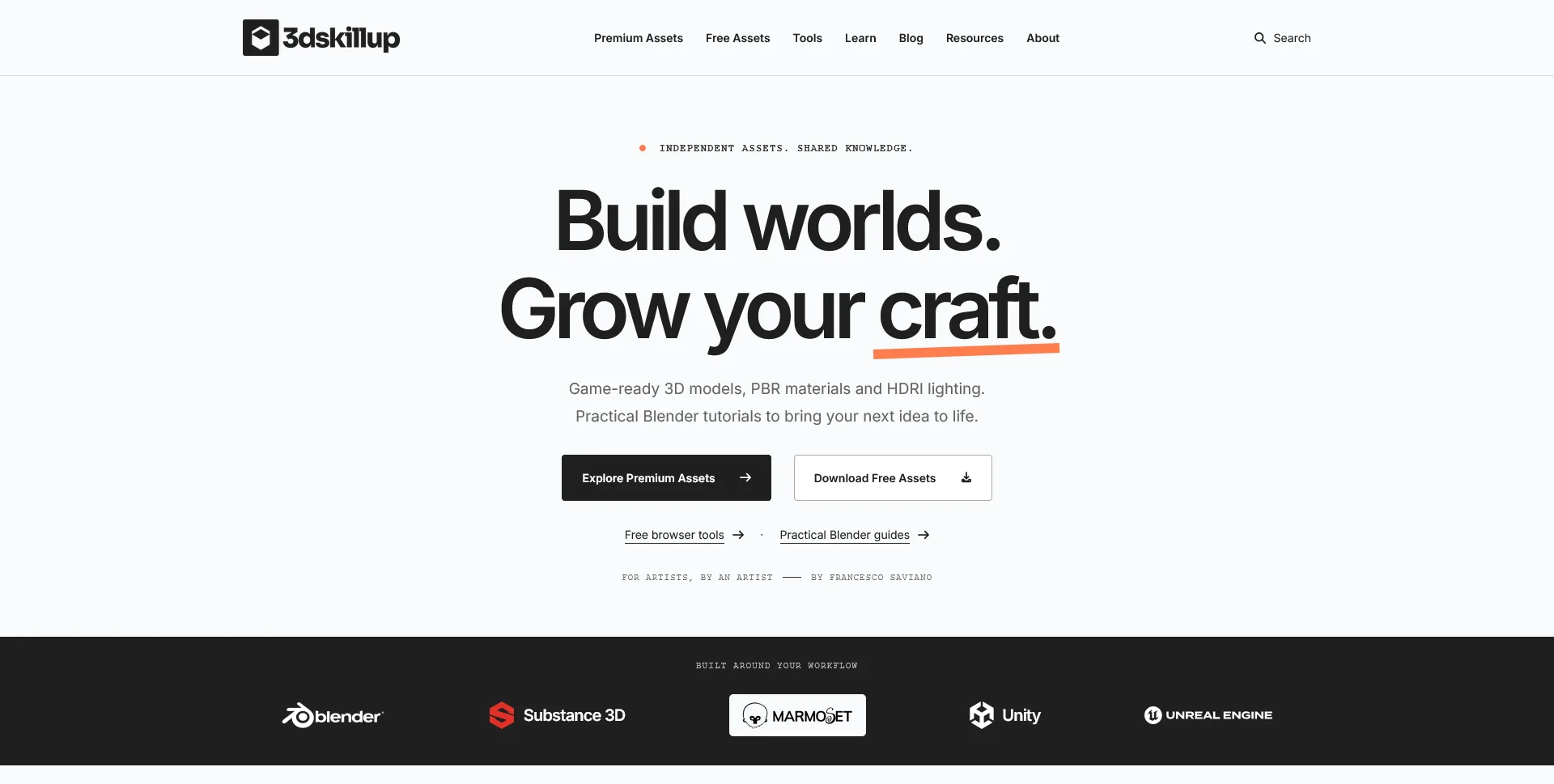
A separate creative platform bringing together game-ready 3D assets, practical tutorials and resources for artists.
Web Design
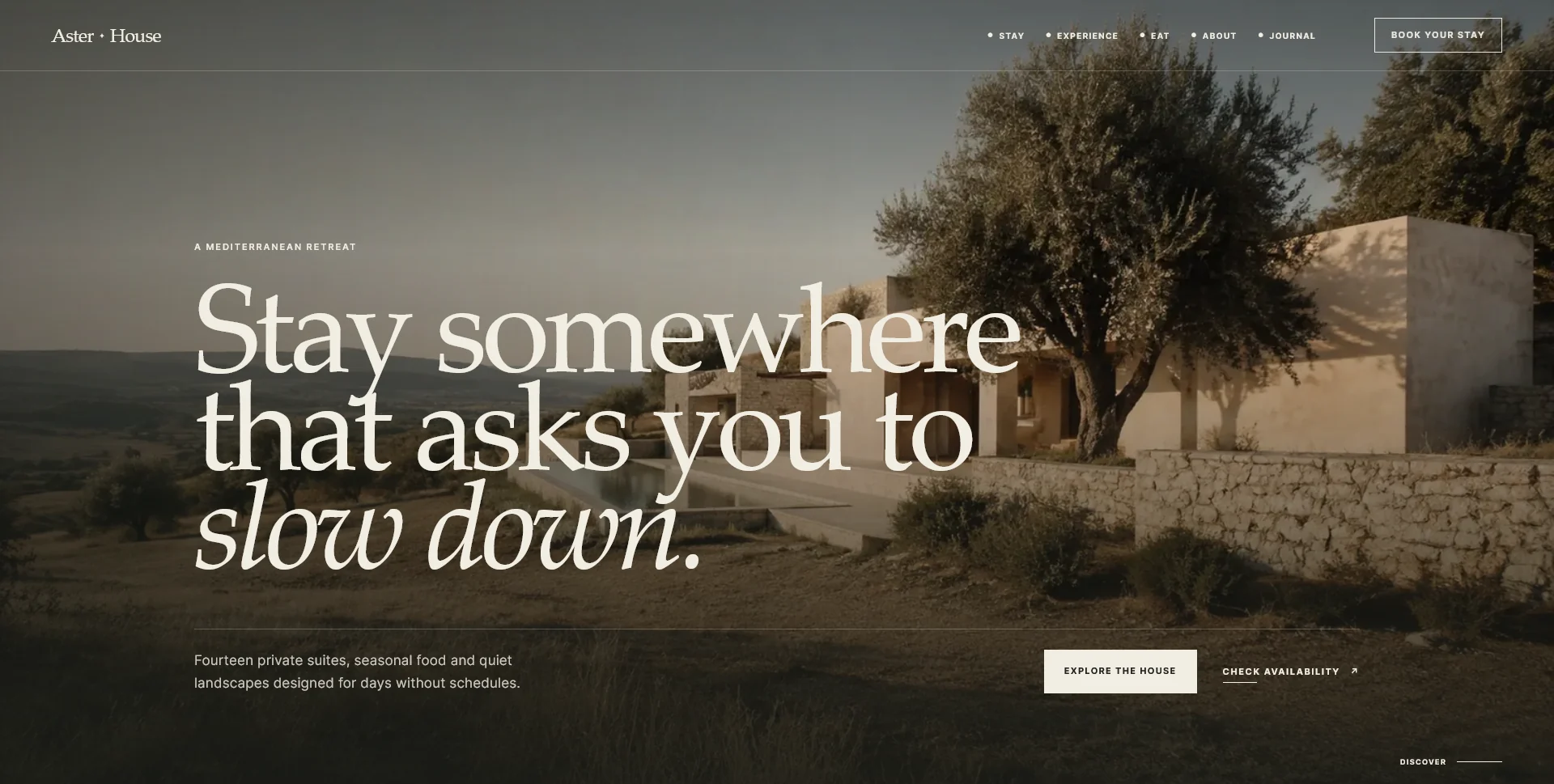
An editorial hospitality concept, combining a Mediterranean visual direction with responsive front-end development.
Web Design · 6 min read
Plan the essential pages for a dental practice website: team, services, visit information and contact. Build a route from questions to appointment requests.
Web Design · 6 min read
Decide whether your dental website needs a refresh or rebuild. Review content, navigation, editing and enquiry routes before choosing the scope of the project.
Web Design · 6 min read
Plan a focused dental website launch with essential information and a working enquiry route. Plan later additions without committing to a complete rebuild.
Have a website in mind?
A short outline is enough to start a conversation.
Discuss your project View my 99designs profile5.0 / 5 from 25 reviews on 99designs. Read client feedback.