Web Design
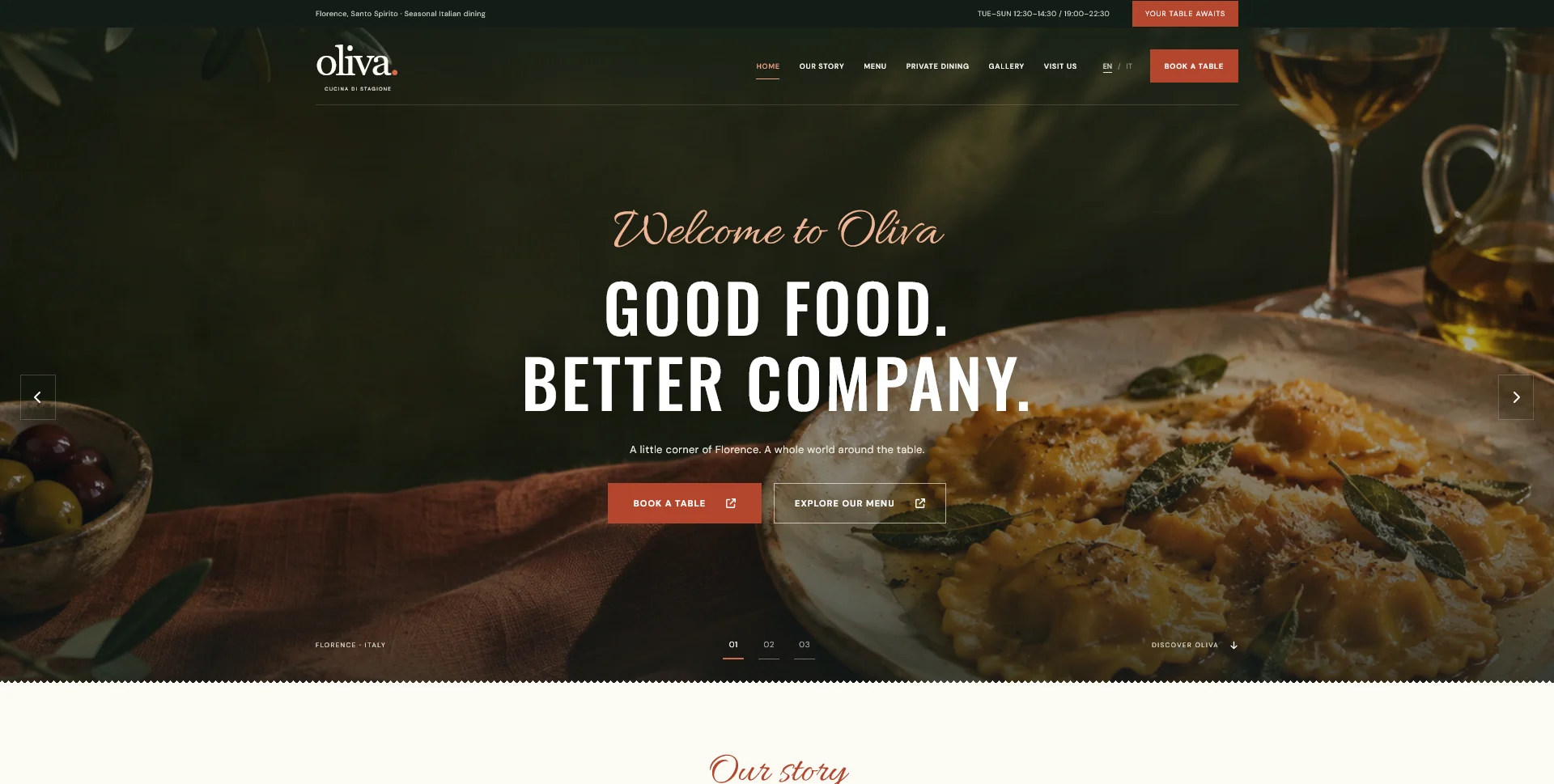
Oliva
A personal restaurant website concept combining an expressive Italian dining atmosphere with a photographic menu, clear visit information and a demonstration reservation journey.
 Let’s talk
Compare a restaurant website template with custom design. Test real menus and photos, assess editing needs and understand what each approach includes.
A restaurant website template can be a sensible starting point when its structure fits your menus, content and booking process. Custom design becomes more valuable when those needs require a different structure or a more distinctive presentation. The decision is about what the finished website must do and who will maintain it.
A beautiful demonstration site does not answer those questions. Its photographs, short menu descriptions and perfectly matched sections may bear little resemblance to the material your restaurant can provide. Compare the options using your own content before committing to either route.
“Template” and “custom” describe how a design starts. They do not fully describe how a website is built or updated.
A template might be installed on a hosted website builder or a content management system. A custom design might also use a CMS, established components and an existing booking provider. Custom work does not have to mean writing every technical component from scratch.
Ask for the proposed combination in plain language: the design approach, the publishing platform, the editing tools and the reservation destination. For the distinction between visual deliverables and an implemented site, read restaurant website design only versus a complete build.
Before evaluating animation or colour, put a representative sample of your content into the proposed structure. Use your actual logo proportions, a long dish name, a menu with several sections and a photograph you have permission to publish.
Review these situations:
| Test | What a suitable starting point allows | Warning sign |
|---|---|---|
| Menu content | Readable sections with clear prices and context | Every dish must fit a tiny image tile |
| Reservation action | A prominent link to the agreed booking route | The main button can only open an unsuitable form |
| Photography | Crops that work with the available images | Essential text depends on a particular demo photograph |
| Everyday editing | Staff can change routine information safely | A menu update requires rebuilding several layouts |
| Mobile navigation | Visitors can find menu, hours and booking easily | Decorative controls obscure the main destinations |
A template that passes these tests may need only careful typography, content organisation and a restrained visual adaptation. A low purchase price becomes less relevant if the layout needs extensive reconstruction.
If the required destinations are still uncertain, decide which pages your restaurant website actually needs before comparing templates.
Image requirements are part of that content test. Use the restaurant website photography brief to identify the food, room and entrance shots your pages need, then test the crops in the proposed layout. The Oliva personal concept illustrates a coordinated visual direction; its generated imagery is a reference for art direction, not a substitute for documenting your restaurant.
Custom design can help when the restaurant’s information does not fit the available patterns. A venue with a dining room, private events and a changing tasting menu may need several distinct journeys. A restaurant group may need a shared identity with clear location-specific menus and opening hours.
It can also be useful when the atmosphere is an important part of the decision. Photography, spacing, type and the sequence of information can communicate a particular dining experience without sacrificing practical details.
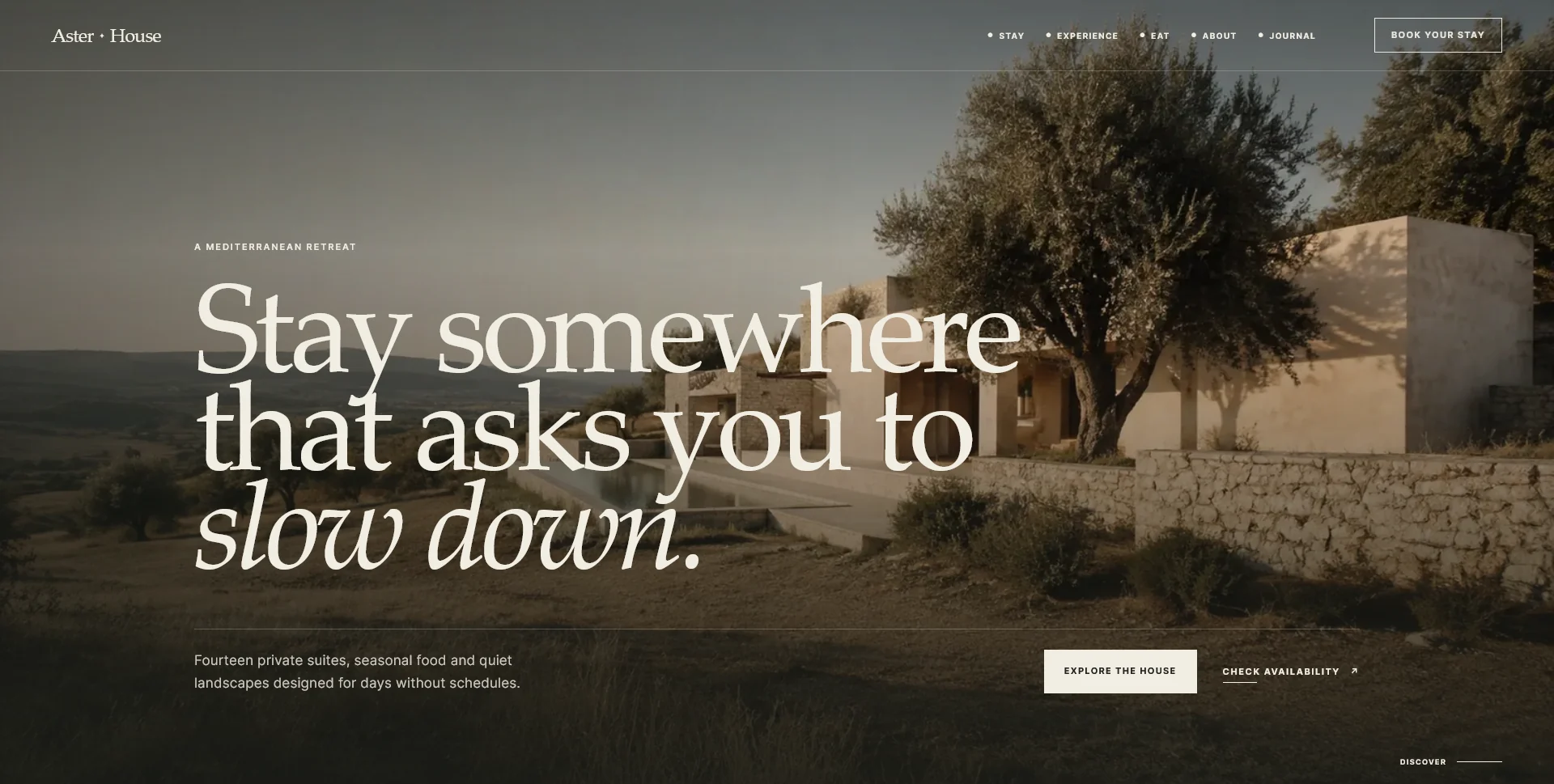
The Aster House hospitality website concept illustrates this relationship between atmosphere and useful information. It is a personal design concept, not evidence of restaurant booking results. Use a portfolio example to discuss design judgement and presentation, then assess the actual requirements of your own venue.
Write down the problem each custom element would solve. “A separate private-dining route explains capacity and enquiry requirements” is a stronger reason than “we want something no one has seen before.”
Either approach still needs accurate content, responsive implementation, clear navigation and testing. A template does not automatically supply those things, and a custom layout does not guarantee them.
Compare the same responsibilities across both proposals:
These items belong in the scope. They should not disappear from a template proposal because the visual starting point already exists.
For an existing website, also consider whether a full replacement is justified. The guide to restaurant website redesign versus rebuild separates presentation problems from deeper platform constraints.
Ask to see the editing task that will happen most often. For many restaurants, this is changing a dish, price, opening time or seasonal notice. A short demonstration using realistic content tells you more than a long list of platform features.
Clarify who owns the website account, which licences renew, what updates are needed and whether support is included. A custom site still has dependencies. A template-based site still needs someone responsible for keeping information and software current.
For WordPress, include an agreed backup and update process. The official WordPress upgrade guidance recommends backing up before updates. Buying a theme is not a substitute for deciding who will do that work.
The right editing model may be staff-managed CMS content, scheduled updates by a designer or another clearly defined arrangement. Choose the one the restaurant can sustain.
Imagine a neighbourhood restaurant with one menu, one location and an existing reservation link. Its photographs are ready, and a suitable template presents the information clearly on mobile. A careful adaptation may be a reasonable first phase.
Now imagine a venue with separate dining experiences, several menu schedules and a private-events service. A template that forces all enquiries through one generic button may create more adaptation work than it saves. A tailored structure could be justified even if it uses a familiar CMS underneath.
These are illustrative situations, not universal rules. In either case, compare the proposed outcome and the full website quote, including implementation, content work and recurring costs.
Yes. Appropriate content, consistent typography, good image selection and careful implementation can create a strong result. The relevant question is whether the selected template supports the restaurant’s actual information and update needs.
No. Search visibility also depends on useful content, accessible destinations, technical implementation and many factors outside a visual design decision. Evaluate specific SEO deliverables instead of treating “custom” as a ranking promise.
Yes. A project can use an established platform and components while giving the restaurant a tailored page structure and visual direction. Ask which parts are adapted, which are designed specifically and what limitations remain.
SavianoDesign’s Website Design service includes design-only, design with frontend development and a WordPress CMS option. The appropriate scope depends on the content, editing needs and implementation responsibilities.
Share your menu, a few real photographs, the booking method and any template or reference you are considering. We can use those materials to discuss where adaptation is sufficient and where tailored design would be useful.
Web Design
A personal restaurant website concept combining an expressive Italian dining atmosphere with a photographic menu, clear visit information and a demonstration reservation journey.
Web Design
An editorial hospitality concept, combining a Mediterranean visual direction with responsive front-end development.
Web Design
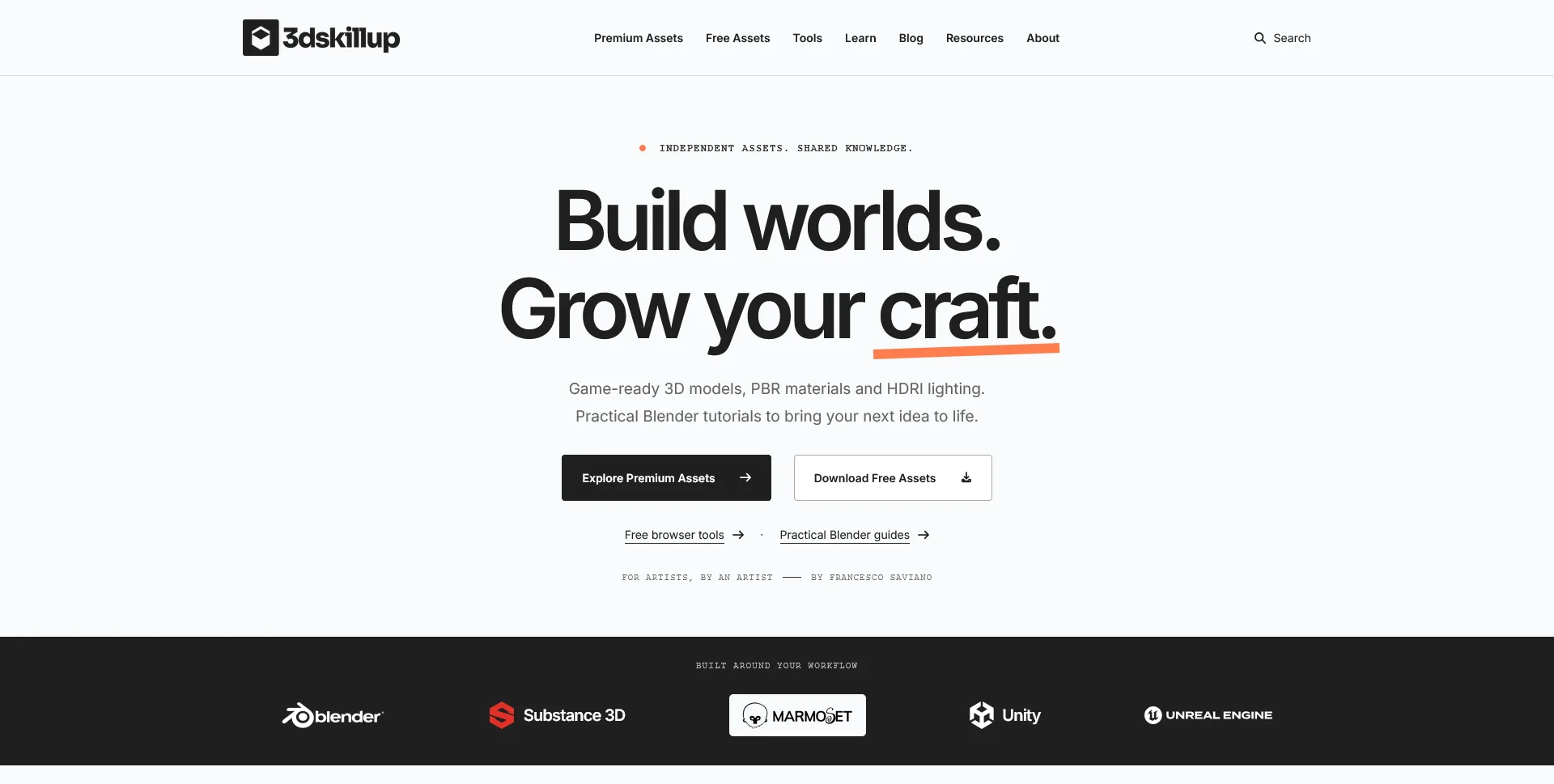
A separate creative platform bringing together game-ready 3D assets, practical tutorials and resources for artists.
Web Design · 6 min read
Prepare a restaurant website photography brief around food, rooms and visiting information. Plan essential shots, useful crops, approvals and the handover.
Web Design · 6 min read
Choose restaurant website design, frontend development or a CMS build. Clarify deliverables, booking responsibilities, editing and the final handover.
Web Design · 6 min read
Compare restaurant website quotes with a clear scope checklist covering design, content, development, recurring costs, revisions and launch responsibilities.
Have a website in mind?
A short outline is enough to start a conversation.
Discuss your project View my 99designs profile5.0 / 5 from 25 reviews on 99designs. Read client feedback.