Aster House
Web Design

Plan a useful local experiences section for a boutique hotel website, with curated suggestions, practical details, clear booking roles and contextual links.
A useful local experiences section helps a guest choose something relevant, understand the practicalities and know who to contact or book with. It connects the hotel to its surroundings without turning the website into an unstructured directory of attractions.
Start with a small, considered selection. Explain why each suggestion belongs, how it fits into a possible stay and which details need checking before setting out. The design should make the difference between hotel activities, partner offers and suggestions for unaffiliated venues immediately understandable.
“Discover the area” is a broad invitation. A more useful planning question is: what decision will this section support? Someone choosing a hotel may want to understand the neighborhood. Someone who has already booked may be planning a free afternoon or checking what can be reached without a car.
Identify a few situations that fit the property’s actual guests and location. These might include a short walk before dinner, an indoor activity for a rainy day or a longer outing requiring transport. They are content-planning categories, not assumptions that every destination offers the same experiences.
The guide to balancing boutique hotel atmosphere with practical information explains how a brief introduction to the area can sit on the homepage. The experiences section provides the detail behind that introduction.
Choose suggestions because they are relevant to the stay, not because they fill a grid. A short description should explain what makes the place or activity worth considering for the intended guest.
Useful local knowledge is specific: the kind of work shown in a gallery, the character of a route or what a visitor can expect from a workshop. Attribute recommendations honestly. “Our team’s regular stop” needs to reflect real team experience; it should not be added as a decorative claim.
Google’s people-first content guidance emphasizes usefulness and relevant knowledge. For a hotel’s local guide, an appropriate application is to publish informed, maintained recommendations instead of rewriting generic attraction descriptions for search traffic.
For a modest collection, a few headings may be enough: nearby walks, culture, food or day trips, depending on the actual material. A larger collection may benefit from filters, but every filter should help someone narrow a real choice.
Use criteria consistently. If “Nearby on foot” is a category, establish an editorial rule for it and include actual travel context for each entry. Avoid placing a distant attraction in the group merely because it suits the visual theme.
Time-based labels can help, but clarify what they mean. “A half-day outing” should account for travel and the activity, rather than quoting only the time spent at the destination. Present itineraries as suggestions with room for changing conditions, not as guaranteed schedules.
A card can introduce the experience in a few lines, then link to a fuller entry when needed. Use a common content model so visitors can compare suggestions without relearning the layout.
Include the name, location, reason to go and approximate travel context. When giving a travel time, state the mode and starting point. “About [time] on foot from the hotel” is clearer than an unexplained number, provided the estimate has been checked.
Also consider seasonality, whether advance booking is needed, any relevant access information and where current opening details can be confirmed. Publish verified facts; link to the venue or operator when the hotel cannot reliably maintain a changing detail.
This is an illustrative content pattern, not a real recommendation:
[Gallery name] — contemporary art near [location]
Explore [verified focus of the collection or current programme]. Approximately [checked time] by [travel mode] from the hotel. Venue unaffiliated with the hotel; admission and opening times are set by the gallery.
Next step: View the gallery’s current visitor information.
The value comes from the checked details filled into the pattern, not from the pattern alone.
A hotel website can describe several kinds of experience. Guests need to know which relationship applies before they click a button or assume something is included.
| Type of experience | What to explain | A suitable next action |
|---|---|---|
| Offered by the hotel | What is provided, when it runs, any cost and how participation is arranged | View the hotel’s activity details or ask about availability |
| Arranged through a partner | Who runs it, who confirms the booking and which terms apply | Contact the named provider or follow the agreed booking route |
| Local suggestion (no partnership) | That it is a suggestion, with current information maintained by the venue or operator | Visit the official visitor information or booking page |
Use wording that matches the actual arrangement. “Ask reception for directions” is different from “Reserve through reception.” A recommendation should not look like a guaranteed hotel service simply because it appears beside room photographs.
If an activity is included only with a specific package or rate, state that relationship near the offer and link to the applicable details. The guide to presenting room categories clearly explains why room features and reservation conditions need separate treatment.
An image should help someone recognize the type of experience. Use material the hotel is entitled to publish, and identify a nearby destination as such. A swimming spot away from the property should not be presented as the hotel’s private waterfront.
Keep a concise description in text alongside the image. The reader should understand the suggestion even if the photograph does not load or cannot be seen. Avoid placing the only location or booking instruction inside a decorative image.
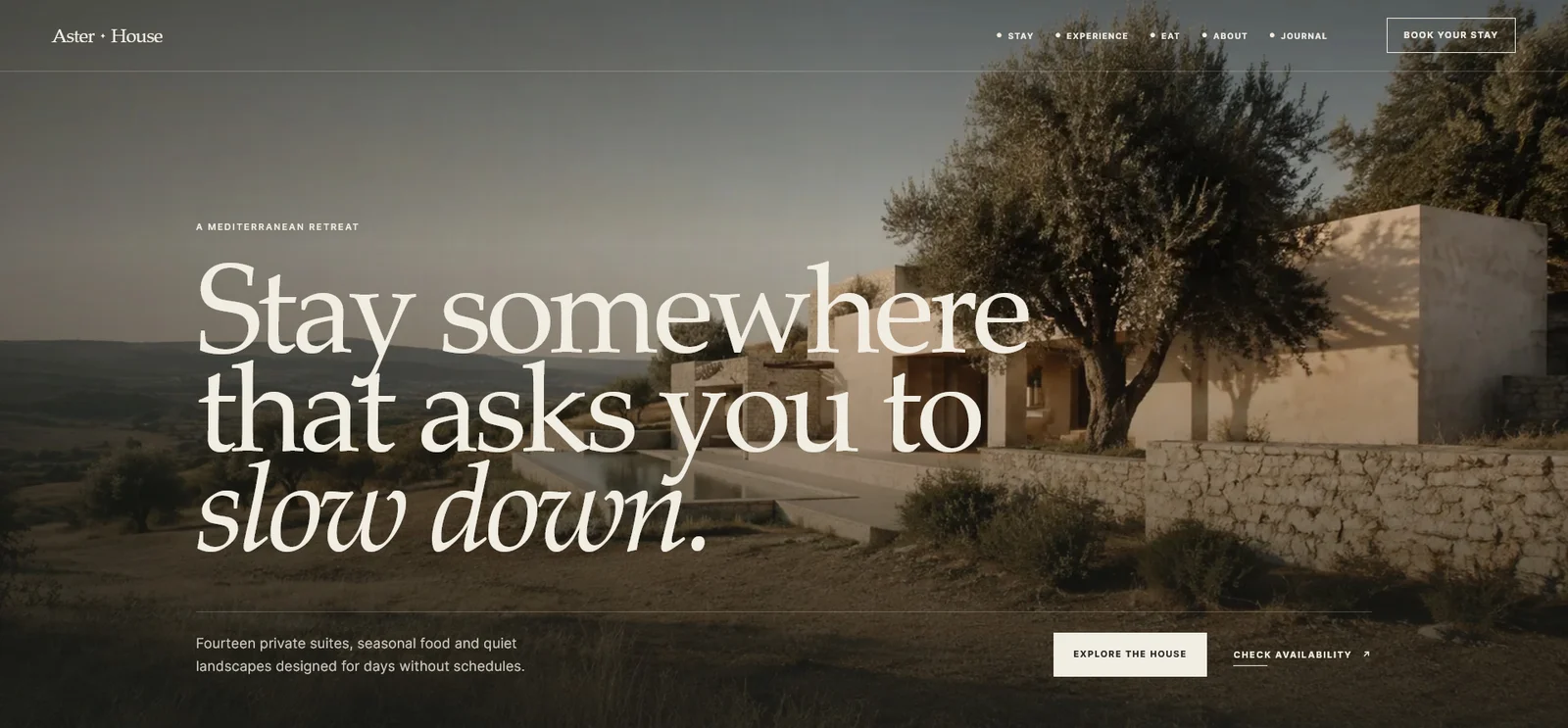
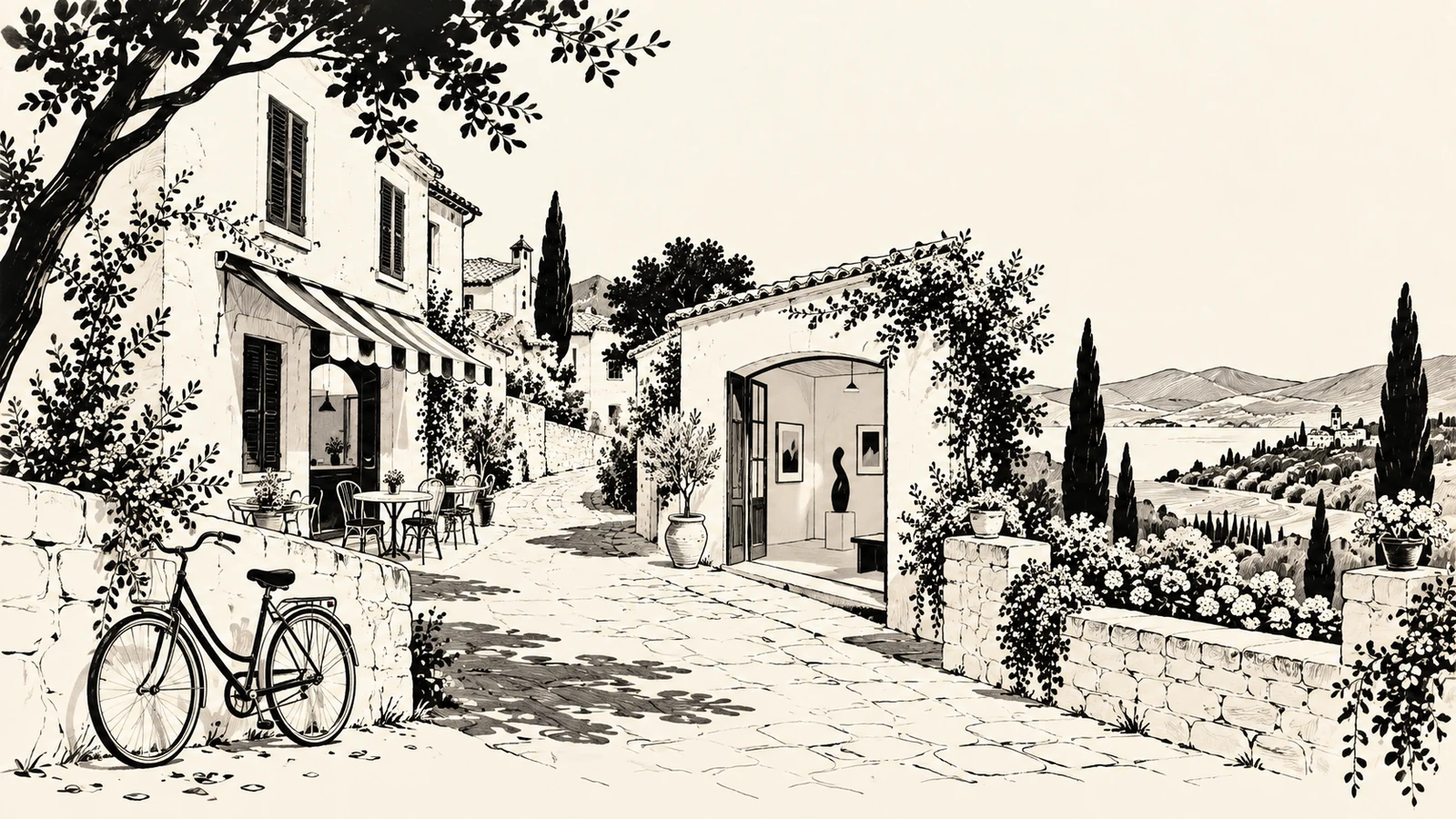
An illustration can establish the character of an editorial guide, as the original illustration in this article does. Photographs and factual descriptions of an actual destination still need to represent the place accurately. The Aster House concept offers an example of hospitality visual storytelling; it is a personal design study, not evidence of a real destination experience.
A map can help a visitor understand where suggestions sit in relation to the hotel. Keep names, addresses or useful location descriptions in a readable list as well. Someone should not have to interact with a map to discover what the section contains.
Label directions links with the destination. If the route begins at the hotel, make that clear. A straight-line distance does not explain a walking route, and a driving estimate does not answer whether the place is reachable by public transport.
For outdoor routes, publish only details the hotel can substantiate and direct guests to the relevant operator or official local guidance for current conditions. Avoid turning an attractive route description into a blanket promise that it suits every visitor.
Use a dedicated experience page when there is enough useful, maintained material to justify it. A short recommendation for an unaffiliated venue may only need a clear card and a link to the venue’s official site. There is little benefit in creating many nearly identical pages that repeat a destination name without adding guidance.
Google’s link guidance recommends crawlable links with descriptive anchor text. In this context, “Museum opening times and tickets” explains the destination more clearly than several repeated “Discover more” links.
The website navigation guide shows how these contextual routes complement the main menu. Keep a recognizable path back to the experiences overview and a separate, accurately labeled route to rooms or hotel booking.
Record who maintains each recommendation and when it was last checked. Review changing information such as seasonal operation, booking routes, closures and transport advice at an interval suited to the destination. A displayed review date should reflect an actual review, not an automatically refreshed timestamp.
When an experience becomes unavailable, decide whether the entry still helps. A temporary closure may need a visible update; a permanently closed venue may need removal and an appropriate replacement route for existing links. Do not leave a booking button active when its destination no longer offers the activity.
Before launch, ask someone to plan an afternoon using only this section. Can they choose an option, understand how to reach it and identify who handles any booking? Note which details they have to search for elsewhere, then decide whether your page should answer them or direct readers to the authoritative source.
For activities that return each season, distinguish the lasting program from each dated edition. The guide to managing expired and upcoming seasonal content explains registration states, archive pages and update responsibilities so last season’s invitation does not appear to be available today.
Include as many as the team can select thoughtfully and maintain accurately. Begin with a focused set that serves different guest needs, and expand when each new entry adds a useful choice.
That depends on who provides them and how reservations are handled. A clear link or enquiry route may be appropriate. A booking feature needs an agreed operational and technical setup.
Recommendations for unaffiliated venues can be useful. Identify them as suggestions, describe the relationship accurately and link to the venue’s current official information rather than implying hotel control or inclusion.
SavianoDesign’s Web Design service can help structure a local guide, create consistent experience cards and connect the section with rooms, practical information and the rest of your website.
Explore the Web Design portfolio, then contact Francesco about your hotel’s local experiences section. Share your current content and the way activities are organized so the design and front-end scope reflect what your team can maintain.
Web Design · 8 min read
Create a boutique hotel website that communicates atmosphere while making location, room choices, inclusions and the next booking step easy to understand.
Web Design · 8 min read
Help guests compare boutique hotel rooms with clear occupancy, bed, space and amenity details, representative photos and an understandable booking route.
Web Design · 8 min read
Plan website navigation with clear menu labels, useful page groups and mobile behaviour. Includes a practical route map and a checklist for testing.
Have a website in mind?