3DSkillUp
Web Design

Plan a company history page before website design. Select useful milestones, connect heritage with today's offer and keep a long chronology easy to explore.
A website with a long company history needs a clear distinction between the story that helps a visitor understand the business and the archive that preserves its past. Before drawing a timeline, decide what the history should explain, which milestones support that explanation and where readers can explore more detail.
The difficulty is rarely a shortage of material. It is choosing among decades of photographs, ownership changes, products, buildings and celebrations without giving every item equal prominence. A useful structure can preserve that richness while keeping the current offer understandable.
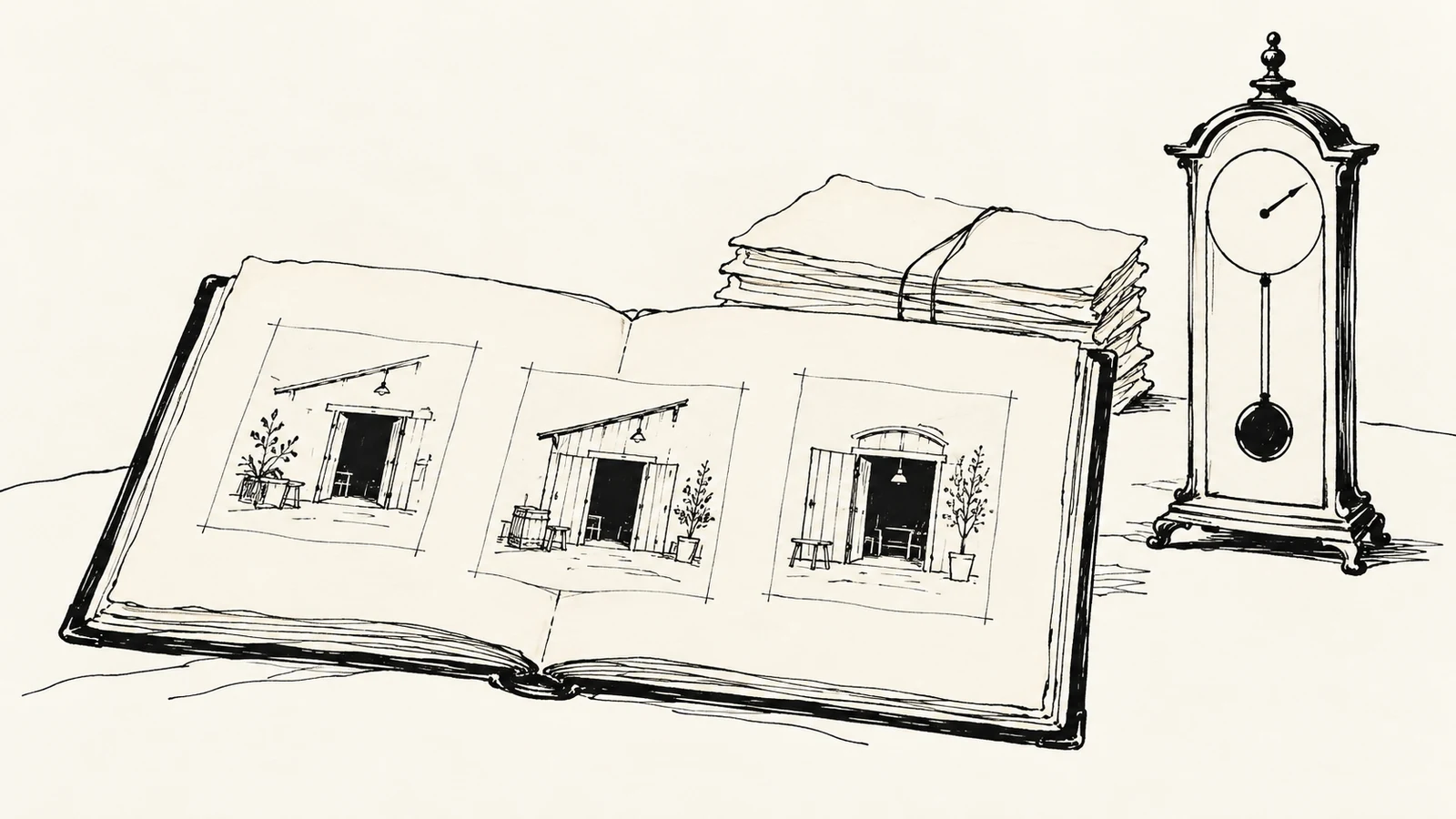
Start with the question a prospective customer might ask: how did this business develop its expertise, what has remained consistent or why is its present focus different from its original work? These questions suggest a narrative. A list of dates alone does not answer them.
Write a short purpose statement for the page. For a specialist workshop, it might be to explain how generations of making and repair led to the services available today. For a manufacturer, it might be to show the development of a particular capability. Use the actual business story, not a generic promise about tradition.
Then separate the visitor’s needs from the internal desire to commemorate every achievement. Both can have a place, but they need different levels of detail. A former employee researching a photograph may want an archive; a new buyer needs enough context to evaluate the offer.
If the homepage currently leads with a founding date but leaves the service unclear, first review how to update an established business’s opening message. The history can support that message without carrying the entire first impression.
Collect the material in a working document before selecting the public sequence. Record the event, date or period, source, available image, relevant credit and person who can confirm the account. Mark uncertain dates and missing context rather than quietly making them precise.
Keep founding, incorporation, ownership and trading-name changes distinct. A family’s earlier involvement in a craft is not automatically the founding date of the current company. Agree accurate wording with the business before turning it into a large visual claim.
Check what each photograph actually shows. An image can be valuable without proving the year or event beside it. A caption such as “The original workshop, photographed in the early 1960s” should reflect the available evidence; do not label an approximate image with an invented exact date.
The inventory also protects material removed from the main page. Editing a public story does not require discarding the source archive. Keep files and notes organized so future updates can trace a statement back to its basis.
For each proposed milestone, complete the sentence: “This matters to a visitor because…”. The answer might concern a new capability, continuity of expertise, a significant design approach or the reason the business works in a particular way today.
An office move may matter because it created a showroom customers can visit. Another move may be administrative background. The fact that both have dates does not give them the same narrative weight.
This fictional selection exercise shows how a workshop might review its records. It is not a client history or evidence of commercial results.
| Archival item | What it could explain | Editorial treatment |
|---|---|---|
| First workshop opens | Origin of the practice and its initial work | A concise founding milestone with a verified image |
| Repair becomes a specialist service | How the present expertise developed | Explain the change and link to the current service |
| Three routine premises changes | Background continuity | Group into a short period summary if relevant |
| A major commission with surviving documentation | Evidence of a capability | Link to a properly credited project account |
| Anniversary dinner photographs | A commemorative occasion | Place in an archive or dated news entry where useful |
Apply the same rule to recent events. A current award or launch still needs an explanation of its relevance. Avoid allowing the latest press release to dominate simply because its photographs are easier to find.
Strict chronology is one possible structure. Another is a short present-day introduction followed by a few meaningful periods, each explaining a change in the business. A thematic account can work when separate strands, such as craft and product development, are easier to understand separately.
Choose the structure that makes the relationships clearest. A period heading such as “From repairs to specialist restoration” can explain more than “1980–1999,” provided it accurately describes those years. Dates remain useful supporting information.
Avoid dividing the page into equal decades merely to create a balanced layout. Some periods contain several important developments; others may need only one sentence. Let the verified story determine the space it receives.
W3C’s writing guidance for web accessibility recommends meaningful headings and clear content. Applied to a company history, the chapter headings should communicate the story even when someone scans them without studying the photographs or timeline decoration.
The homepage can introduce a concise heritage statement beside evidence of the current offer. A company story page can explain the selected milestones. A deeper archive can preserve documents, historical galleries or detailed records when the business has enough useful material to maintain it.
These roles help prevent the same long chronology appearing on the homepage, About page and every service page. Reuse short verified facts where they support a decision, and link to the fuller explanation.
The homepage content checklist helps place history alongside the offer, relevant work and next steps. It should be possible to understand what the company does today without first reading its whole past.
For a large collection of historic commissions, organize the project portfolio separately from the company timeline. A milestone can point to a case study; the story page does not need to reproduce every project gallery.
A history page explains how the business developed; the About page should also make its current people and responsibilities clear. Use the guide to introducing the people behind the business to connect the heritage story with who leads the work today.
Prepare a plain-text outline with a brief introduction, descriptive chapter headings and the selected evidence beneath each. Ask whether a reader can understand the main story by scanning, then whether the detail rewards a closer read.
An index of chapter links may help a longer page. A timeline should also have a sensible reading order on a small screen. Do not make essential facts available only by dragging a horizontal strip, hovering over dates or opening images with no explanatory text.
Specify how captions, dates and images stay associated when the layout changes. A decorative line connecting milestones should not be the only thing establishing their sequence. If an interactive treatment is proposed, review keyboard access and a useful reading experience when the interaction is unavailable.
Where the site has two languages, maintain the same verified milestones across the versions and agree how names and historical terms are explained. The guide to planning bilingual language switching covers keeping readers on the equivalent page instead of sending them back to the homepage.
An anniversary can produce a permanent historical milestone and a temporary invitation. Keep their jobs distinct. The founding story can remain relevant after the celebration ends, while an invitation needs current dates and an appropriate next action.
The guide to managing expired and upcoming seasonal content explains how to separate durable information from individual editions and time-sensitive messages. The same distinction helps a company history avoid becoming an accumulation of old promotions.
Before approving the layout brief, agree who signs off dates, captions and claims; which material belongs in the main story; and how future milestones will be considered. Add an unresolved-questions list so missing evidence cannot become polished but inaccurate copy.
Test the outline with someone unfamiliar with the business. Can they explain what the company offers now, identify a relevant reason to trust its experience and find the next useful page? Revise the content hierarchy where those answers remain unclear.
Include the milestones needed to explain the story accurately. There is no universal ideal number. Review each one for relevance, combine routine developments where appropriate and provide deeper archival material separately when it serves a real need.
A short introduction can work well there. The complete story usually needs a dedicated destination so visitors can choose how deeply to explore it while still finding services, work and contact information easily.
Use an honest approximate period when the evidence supports it, and describe uncertainty where it matters. Confirm publication permissions and credits. Avoid inventing a precise date to make a timeline look complete.
SavianoDesign’s Web Design service connects the current offer, company story and supporting evidence within a complete homepage or website redesign.
Explore the Web Design portfolio and contact Francesco about your website. Share the current site, the history material you have and the work you want to emphasize today. We can use that starting point to agree the content structure, responsive design and front-end scope.
Web Design · 8 min read
Plan language switching for a bilingual website. Map equivalent pages, handle missing translations and keep navigation, content and next steps consistent.
Web Design · 8 min read
Plan a seasonal program website with clear dates, booking states and archives. Separate expired content from upcoming activities before the first layout.
Web Design · 8 min read
Write a local business homepage headline that reflects your offer today. Keep useful heritage, clarify your services and support the message with evidence.
Have a website in mind?